
Drones, Hover Boards, Lawsuits, OH MY!
I am not going to lie—when I heard that Amazon would be delivering packages via drones last year I was ecstatic. As a perpetual procrastinator, gift buying and completing errands in general happen much later than they should and holiday express shipping kills me. But, the drones never took off, much to the chagrin of most of the country (especially after those funny commercials). Now, if drones were big last year, they’re nothing compared to how popular hoverboards are this year. Everyone went crazy over the stemless Segways, and they were the big ticket item this past holiday season. But these too are falling flat.

Both drones and hoverboards have come under fire recently, and more and more legislature has been passed to keep their usage in check. For example, the Federal Aviation Administration (FAA) rolled out a mandatory registration program 2 weeks ago for all drones, commercial or personal. Drones are not allowed to be flown within 15 miles of downtown D.C. or airports. In Europe and in some American cities and states, hoverboards are not a legal form of transportation on public roads or sidewalks and can only be used on private property. In California one must be 15 to operate a hoverboard and be wearing a helmet and pads. The begotten question is, why all of the hullabaloo over technology’s newest fads?
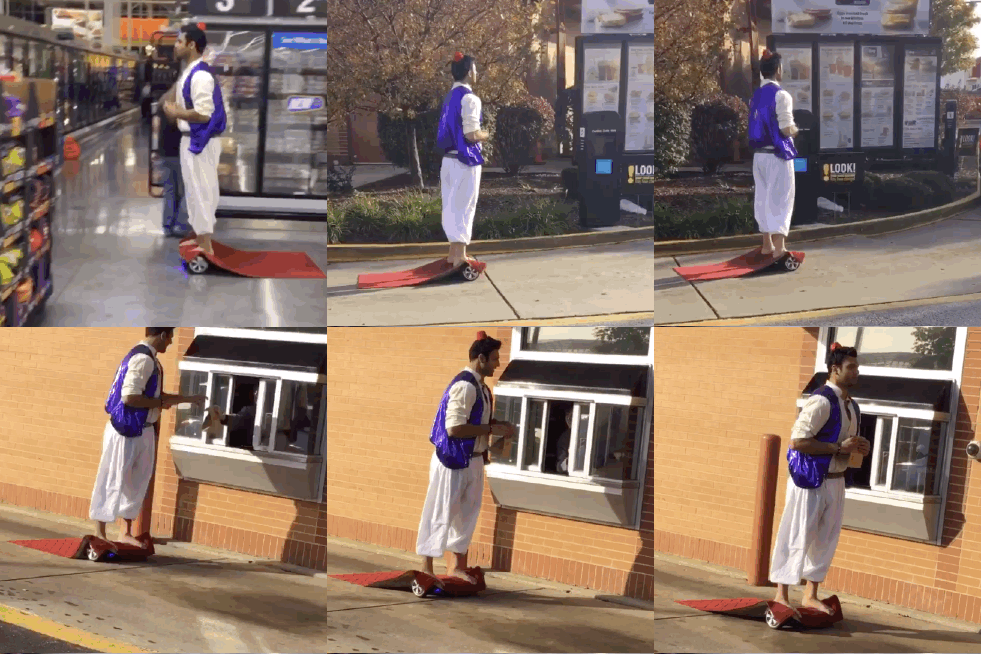
Let’s put this in perspective:
August 2013– A drone capturing footage for a production company abruptly tilted and crashed into the crowd at the Great Bull Run in Virginia. Four or five spectators were injured. Later that month a drone operator, hired to capture video of a wedding, accidentally flew it directly into the groom’s head.
April 2014– A photographer was piloting his drone in order to film the Endure Batavia Triathlon in Geraldton, Australia. But he lost control of the drone—which wound up hitting one of the runners in the head, causing minor injuries.
December 2014– TGI Fridays restaurants thought it would be cute to fly a drone carrying mistletoe over diners’ heads. A drone operator at a Brooklyn restaurant, however, trying to demonstrate how much control he had, attempted to land the drone on a reporter’s hand—but the reporter flinched, sending the drone into the face of her photographer and cutting her nose.
January 2015– Most notably last year Defense Department employee in Washington D.C., crash-landed his personal drone on the White House lawn. He was, he admitted, intoxicated.
December 2015– 3 days after Christmas there were 70 reports of emergency room visits due to hoverboards, according to the U.S. Consumer Product Safety Commission. South Florida congressman Carlos Curbelo went to the emergency room and ended up with his arm in a sling after falling off his nephew’s hoverboard. Baseball player Dan Uggla fell off a hoverboard while listening to Justin Bieber. Mike Tyson also had a spill on his hoverboard that was shared across the internet.

As funny as some of these accidents and stories are, the underlying message is that these new technologies are dangerous, and while it may be fun and games, bruises and broken arms now, it could get much worse. In London, England a teenager was riding his hoverboard on the sidewalk. He lost his balance and was thrown into oncoming traffic where he was hit and dragged by a bus. He died on the scene. It’s a horrific story that could happen here if more regulations or safety measures are not put in place.
Furthermore, with the advent of new technology and new ways to become injured, how does the law keep up? In the case of hoverboards, if you’re riding one and hurt yourself, all onus is on you, the operator, unless there is a malfunction in the product. Contact a product liability lawyer if you suspect you were injured because of a faulty product. If you are injured by a drone, treat it like an automobile accident. Immediately seek medical attention for your drone related injuries, as documentation is key. Ask for the drone owner’s information. If the owner does not come to the scene of the accident you can get their information by recording the serial number and type of drone. If all else fails, take the drone with you to show the police and/or fire rescue. Collect witness information and take pictures of everything! Speak to a personal injury attorney as soon as possible to see if you are a victim of negligence.
Drones and hoverboards are the new “it” items, the Buzz Lightyears of 2016. While a ton of fun, precautions must be made when using them for these are not mere toys, but just the beginnings of the 2015 Marty McFly envisioned back in 1985.
If you or a loved one has been hurt in a drone or hoverboard accident, contact Curcio Law today.